
With the start of the 2026 World Cup approaching, there is an emphasis on the role of sport as an effective tool for uniting peoples

Football stars will be making headlines this summer, but sport has an impact beyond the spotlight. It has the transformative power to connect communities across borders and across generations, and creates spaces for dialogue, solidarity and mutual respect. In just over two months, the largest sporting tournament in the world will start from the Mexican capital, Mexico City. As usual, billions of viewers around the world are expected to follow it.
From June 11 to July 19, the stadiums of Mexico, Canada and the United States will witness the competition of 48 national football teams, through 104 exciting World Cup matches.
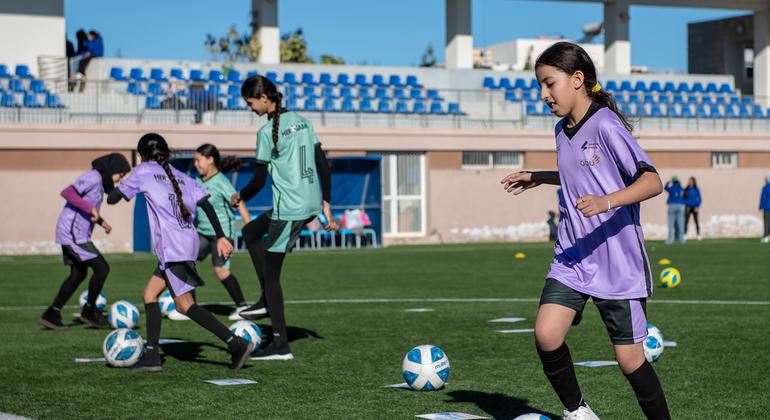
In all regions hosting the tournament across the three countries, a program bearing the name… (Play Collective) Funding and support for community sports organizations, with the aim of providing safe spaces for youth in marginalized areas.
This project comes as a joint initiative between the Adidas Foundation, the Beyond Sport Foundation, and the Common Goal Organization. It is a global non-profit organization that has succeeded in building an international network of community institutions that provide its services to 3.6 million young people annually.
Make room for each other
Mary Connor, Executive Director of Common Goal, was one of the keynote speakers at the event titled “Building bridges, breaking barriers”; It is an event held to celebrate International Day of Sport for Development and PeaceCelebrated annually on April 6 to highlight the transformative power of sport in driving social change, promoting progress towards achieving sustainable development goals, and bringing together individuals and communities from all over the world.
Ms. Connor drew a comparison between the world of football – where the support of teammates is a key pillar of success – and the nature of working at the United Nations. This is the place she said: “In it we come together, transcending our differences and disagreements, and overcoming the cultural barriers that may isolate us from each other.” Adding that we are in this place “We make room for each other so that we can make our way forward, despite all the headwinds and difficult challenges facing us.”
Two years from now, the United States is preparing to host another huge sporting event, the 2028 Summer Olympics, which will be based in Los Angeles.
Pioneering athlete Nawal El Moutawakel was one of the most prominent stars in the last Olympic Games held in Los Angeles in 1984, where she became the first Moroccan, African, Arab and Muslim woman to win an Olympic gold medal (in the 400-meter hurdles race).
Her Olympic victory is seen as a turning point that gave Moroccan women the confidence and courage to engage in the sporting field, which was previously considered the preserve of men. Al-Mutawakel has received many international honors in recognition of her contributions to the fields of sports and social progress, and she currently holds the position of Vice President of the International Olympic Committee.
Overcoming life’s barriers
In her speech during the event held last Wednesday, Mrs. Al-Mutawakel likened her sports specialty to the barriers and difficulties she faced at the beginning of her sports career. She said: “My race was the 400-meter hurdles; it is a race that has a starting point and an end point, with ten hurdles in between. For me, those hurdles symbolize the hurdles of life that teach you discipline, coordination, determination, and passion. Sometimes you may have moments of failure, but I never gave up.”
She added that today’s reality, with a woman assuming the presidency of the International Olympic Committee for the first time in a hundred years (as Christie Coventry is also the first African to hold this position), as well as the fact that women constitute 50 percent of the organization’s cadres at all levels, is a strong indicator of the progress achieved in this regard.
Ms Almutawakel and Ms Connor were joined by a number of prominent young athletes, who spoke about the positive impact sport has had on their lives.
Among them was Aileen Lopez, who overcame mental health issues through playing soccer and currently works as a youth leader for Street Child United, an organization that uses sports to support young people living on the streets or in extreme poverty.

International Day of Sport for Development and Peace
🔷Given its wide spread, great popularity, and reliance on a system of positive values, sport occupies an ideal position to contribute to achieving the goals of the United Nations aimed at promoting development and peace.
🔷With the aim of enhancing awareness of this potential, the United Nations General Assembly announced on April 6 International Day of Sport for Development and Peace.
The adoption of this day is an indication of the United Nations’ increasing awareness of the positive impact that sport can have in the field of promoting human rights and achieving social and economic development.
- For more: Follow Khaleejion 24 Arabic, Khaleejion 24 English, Khaleejion 24 Live, and for social media follow us on Facebook and Twitter


