
"Trends" Organizes a symposium on deconstructing extremist narratives in the age of artificial intelligence and digital media

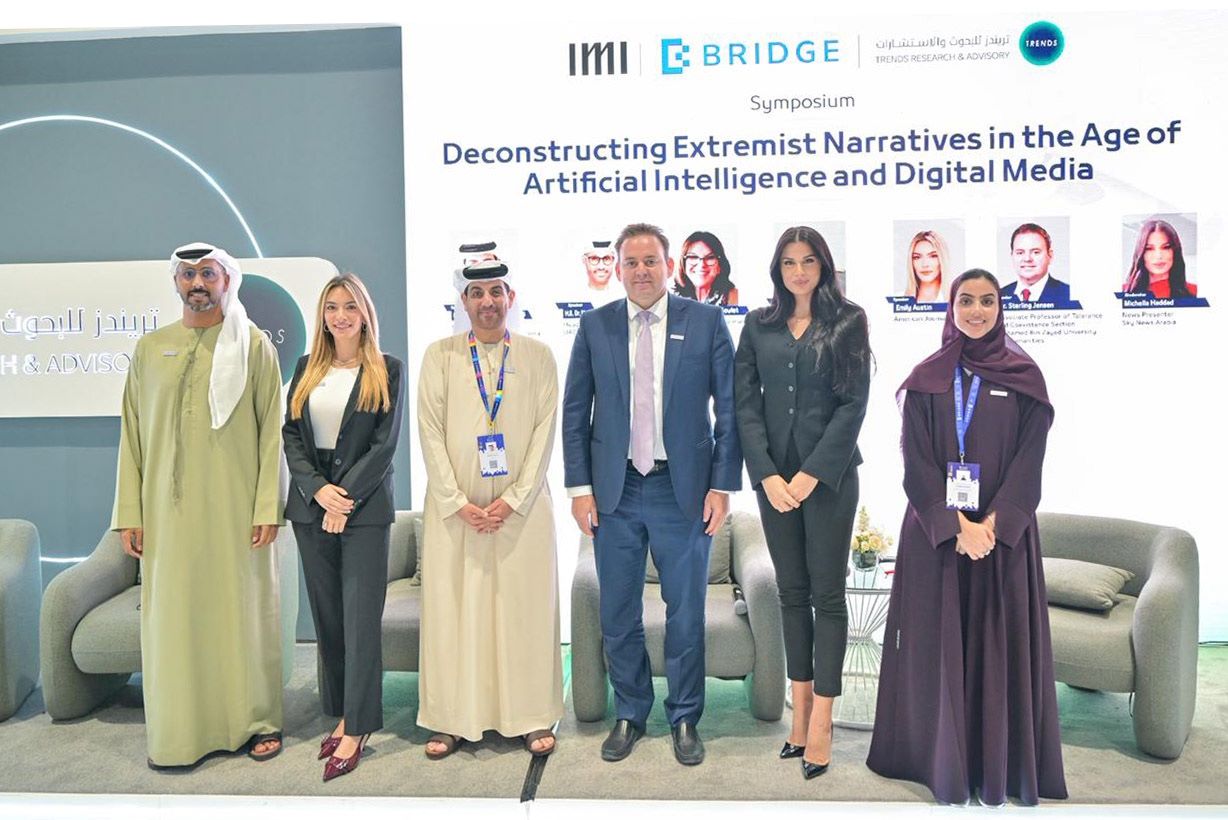
Abu Dhabi, 9 December / WAM / The Trends Center for Research and Consultation, in cooperation with the International Media Investments Company, IMI, organized an international symposium entitled “Deconstructing Extremist Narratives in the Age of Artificial Intelligence and Digital Media”, in the presence of an elite group of experts, academics and specialized media professionals, as part of its participation in the “Bridge 2025” Summit.
Dr. Muhammad Abdullah Al-Ali, CEO of the Trends Centre, stressed in his opening speech at the symposium that extremism is no longer based on direct interaction, but rather has become dependent on hidden digital spaces that are difficult to monitor.
He explained that extremist groups have an unprecedented ability to fragment content and direct it towards precise segments, especially young people and users of short content.
He pointed out that “Trends” works to employ scientific knowledge to dismantle extremist discourses and formulate alternative narratives that promote the values of peace and moderation, appreciating the efforts of international partners and participants in the symposium.
He added that confronting this soft extremism requires multiple arms, including education, media, legislation, and research analysis, stressing that building general intellectual immunity is the most important solution in the long term.
The session witnessed the participation of a number of speakers who provided in-depth analytical insights into the danger of the development of extremist narratives in the environment of artificial intelligence and digital communication, and proposed a set of strategic solutions to confront them.
The symposium was attended by His Excellency Dr. Mohammed Hamad Al-Kuwaiti, Chairman of the Cybersecurity Council of the UAE Government, French Senator Nathalie Goulet, Member of the Senate for the Aron-Normandy region, Gustave Gusténau, Secretary-General of the European Counter-Terrorism and Conflict Prevention Organization, American researcher and media figure Emily Austin, and Dr. Sterling Jensen, Professor at Mohammed bin Zayed University for the Humanities.
The interview was moderated by journalist Michela Haddad from Sky News Arabia, defining the nature of contemporary digital threats, stressing that the world today lives in a digital war zone in which battles are conducted through content, software and algorithms, and not through traditional armies.
She pointed out that extremist groups were able to exploit the digital environment to an unprecedented degree, making them able to spread their messages on a large scale without the need for a field presence. She showed that one click on the phone was now capable of delivering extremist speech to thousands of people in moments.
She emphasized that the media has today become an essential party in confronting these narratives, not only through news, but also through analysis and revealing the hidden framework of hate-inducing content, stressing the importance of public awareness and self-censorship.
She explained that the success of confronting digital extremism depends on the ability of research institutions, media platforms, and decision makers to take joint action, considering the symposium an important intellectual station to develop a map for an actual confrontation of this escalating challenge.
For his part, His Excellency Dr. Mohammed Al Kuwaiti presented a comprehensive presentation on digital security systems in the Emirates, stressing that the country’s success in topping global cybersecurity indicators is due to the integration of the scene between society, educational institutions, technology companies, and security agencies.
He explained that digital extremism today does not only target the information structure, but rather targets the “collective awareness system,” and that extremist groups rely on manipulating information, recycling content, and stimulating emotional polarization with the aim of creating reactions full of suspicion and hatred.
He called for developing digital prevention programs that contribute to creating a protective wall of knowledge that precedes any technical solutions.
For his part, the Secretary-General of the European Counter-Terrorism and Conflict Prevention Organization revealed the results of a field analysis of the Muslim Brotherhood’s methodologies in employing digital communication. He explained that the group works according to gradual strategies that begin with building a charitable image and end with creating narratives against the state and society.
He pointed out that the group’s most dangerous tools are what he called communication jihad, that is, the extensive and professional use of digital platforms to build digital audiences, not only for the purpose of direct mobilization, but also as a future asset to activate protest or political pressure.
He stressed the need to confront hybrid groups through specialized analysis centers that focus not only on content, but also on the organized networks that produce it.
For her part, French Senator Nathalie Goulet confirmed that a large part of the danger of digital extremism is related to the lack of responsibility of the major platforms, which have become an unofficial editor of content.
She explained that artificial intelligence makes content arrangements based on its circulation volume and not on its accuracy or moral value, which gives extremist content a higher priority for dissemination than enlightening content.
She called for the necessity of drafting clear legislation that holds platforms responsible for what is circulated, especially with regard to content targeting minors and minorities, stressing that rethinking the legal framework is part of the basic battle against invisible extremism.
For his part, Dr. Jensen addressed the educational and psychological aspect of combating digital extremism, stressing that young people have become dependent on artificial intelligence to search for information without the ability to evaluate its reliability, indicating that the absence of real social experiences opens the way for distorted narratives that build closed intellectual worlds.
He stressed the importance of including the skills of analyzing media messages and distinguishing between truth and allegations in school curricula, whether in public or university education, stressing that intellectual immunity is the strongest weapon before technical prevention.
The speakers discussed the necessity of integrating narrative analysis mechanisms with artificial intelligence, adopting comparative methodologies to monitor the development of extremist content over time, and developing models capable of predicting spread movements and levels of influence.
The session came up with recommendations that included the importance of strengthening cooperation between think tanks and international technology companies, building specialized cognitive monitoring networks to track misleading narratives, producing educational curricula that stimulate critical thinking instead of negative reception, and developing interactive initiatives targeting young people in digital gaming environments, short content, and artificial intelligence platforms.
- For more: Follow Khaleejion 24 Arabic, Khaleejion 24 English, Khaleejion 24 Live, and for social media follow us on Facebook and Related


