
program "Read" Affiliated with"Saud bin Saqr Foundation for Public Policy Research" It achieves tangible results in developing reading fluency in the Arabic language

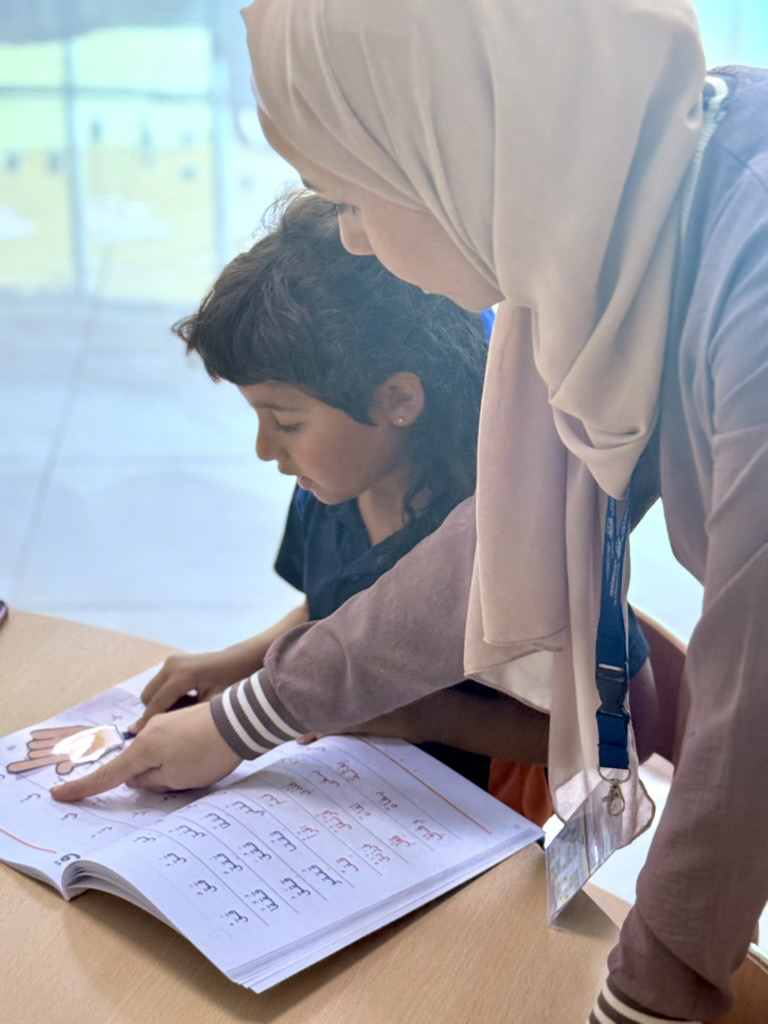
Ras Al Khaimah, May 21 / WAM / The results of an independent evaluation revealed that the “Iqraa” program for reading fluency in the Arabic language, developed by the Sheikh Saud bin Saqr Al Qasimi Foundation for Public Policy Research, contributed to achieving significant progress among young learners in reading skills in the Arabic language, equivalent to an additional increase of 25% compared to what the student usually achieves during a full academic year.
These results came within a randomized controlled trial conducted by the Abdul Latif Jameel Poverty Action Laboratory – Middle East and North Africa (J-PAL MENA), one of the most prominent global centers specialized in evaluating development and educational impact.
The study included 83 classrooms in 26 schools in the Emirate of Ras Al Khaimah during the academic year 2024-2025, making it one of the largest specialized studies in the field of reading fluency in the Arabic language in the UAE.
The results of the study highlight a practical and effective solution to one of the most prominent educational challenges in the Arab world, which is enabling children to move smoothly and confidently from the Arabic language spoken at home to the classical Arabic language approved for reading and learning in schools.
Unlike many other educational initiatives, the “Iqra” program does not rely on expensive technologies, increasing school hours, or applying parallel curricula. The program was implemented in most of the participating schools within the regular school schedule, with only a limited number of teacher training days. Following the remarkable success achieved by the experiment, the “Iqraa” program will be circulated to all private schools in the Emirate of Ras Al Khaimah as of September 2026.
Dr. Natasha Ridge, Executive Director of the Sheikh Saud bin Saqr Al Qasimi Foundation for Public Policy Research, said that poor reading outcomes in the Arabic language have always been treated as if the problem lies in the language itself, without truly addressing the roots of the challenge, pointing out that the “Read” program confirms that this is not the case; When Arabic is taught in a manner that is consistent with the way children actually learn to read, progress becomes rapid, tangible, and achievable within existing educational systems.
She added that the importance of these results lies in the fact that they are based on an independent and accurate scientific evaluation, not on impressions or expectations. The “Read” program demonstrates that teaching methods based on scientific evidence are capable of enhancing Arabic reading skills among native and non-native speakers, and it also provides a model that can be expanded and applied in educational systems across the region.
Dr. Natasha Ridge pointed out that fluency in reading in Arabic is not only an educational issue, but rather represents a cultural, social and economic priority. When children face difficulties in reading fluently during their early school years, the effects of this extend to their various educational stages, pointing out that the “Iqraa” program provides the opportunity for effective and widespread early intervention.
The “Iqra” program was designed to address one of the most prominent challenges associated with teaching the Arabic language, which is linguistic duality, that is, the gap between the colloquial Arabic language that children use in their daily lives, and the classical Arabic language used in textbooks and the formal educational environment.
For many children, learning to read in Arabic simultaneously requires acquiring new letters, sounds and vocabulary, as well as becoming familiar with a more formal language level.
From this standpoint, the “Iqraa” program works to simplify this process through organized and gradual educational steps that contribute to building confidence and reading fluency among students from the early school stages.
The program was also developed in cooperation with Dr. Helen Abadzi, a specialist in cognitive psychology and education, and is based on employing cognitive science in teaching reading in Arabic, with a focus on phonetics, letter recognition, decoding, word reading, and reading fluency, before moving on to more complex comprehension skills.
The program targets children from kindergarten to first grade, and is in line with the Arabic language curriculum approved by the UAE Ministry of Education, to serve as a supportive and complementary tool for existing education, and not a substitute for it.
The J-PAL MENA office randomly distributed the participating classes, such that 41 classes used the “Iqraa” program, while 42 other classes continued to apply the traditional Arabic language curriculum.
The results of the study showed that students participating in the program achieved a significant, statistically significant improvement in reading skills in Arabic compared to their peers in traditional classes.
Among the most prominent results of the study were that students achieved progress equivalent to an additional 25% over a full academic year in reading skills, and improved results for both Arabic-speaking and non-Arabic speaking students alike, in addition to recording an improvement in letter recognition, reading words, decoding unfamiliar words, and oral reading fluency, in addition to achieving the strongest results in the skill of reading words, as it is one of the basic pillars of acquiring reading skills, as well as a shift in the average performance of students from the 50th to 54th percentile at the general level. For reading.
In the skill of reading words specifically, the average performance of students increased from the 50th to 58th percentile.
For her part, Naira Adly Hosseini, Director of the J-PAL MENA Impact Lab, said that the evaluation results proved that the “Iqraa” program brought about a transformation in classroom practices that was directly reflected in the improvement of students’ learning, pointing out that the program contributed to enhancing reading skills in the Arabic language in several key areas, including letter recognition, word reading, and reading fluency.
She added that one of the most prominent lessons learned from the “Iqra” program is that improving the quality of education is not only related to providing more resources or technology, but rather that teaching methods themselves make a fundamental difference in children’s learning.
One of the most prominent strengths of the “Iqra” program is its ease of implementation and practical flexibility, as the program was fully implemented within regular school hours in 21 out of 26 participating schools, making it a suitable model for educational systems seeking to improve Arabic language outcomes without increasing pressure on school schedules.
The program relies on organized educational lessons, books with clear, large fonts, and a thoughtful sequence for teaching letters, in addition to interactive activities such as pair reading, repeated reading, and group reading. All lessons are designed to help children recognize letters, decode words, and read fluently and with greater confidence.
For her part, Hanadi Mohammed, Director of Education and Community Development at the Sheikh Saud bin Saqr Al Qasimi Foundation for Public Policy Research, said that the Arabic language is not a difficult language if it is taught in the right way, and the “Iqraa” program gives teachers a clear and organized methodology that helps children focus first on the basic skills of reading.
She added that the program supports Arabic-speaking and non-native students by building reading fluency gradually and systematically, thus enhancing their confidence in the Arabic language and dispelling feelings of difficulty or confusion associated with learning it.
The program was also applied experimentally in classrooms in Morocco, Egypt, and Jordan, where it showed promising results also for older students who face reading difficulties.
The results of Ras Al Khaimah strengthen the position of the “Iqraa” program as a promising educational model that can be benefited from and applied in Arabic-speaking educational systems throughout the region.
By addressing the gap between the colloquial dialect and classical Arabic, and relying on teaching methods based on scientific evidence related to how children learn to read, the program provides a practical path to improving basic reading skills, which are considered one of the most important indicators of academic success in the future, while the “Read” program will be implemented in all private schools in the Emirate of Ras Al Khaimah starting in September 2026.
- For more: Follow Khaleejion 24 Arabic, Khaleejion 24 English, Khaleejion 24 Live, and for social media follow us on Facebook and Related


